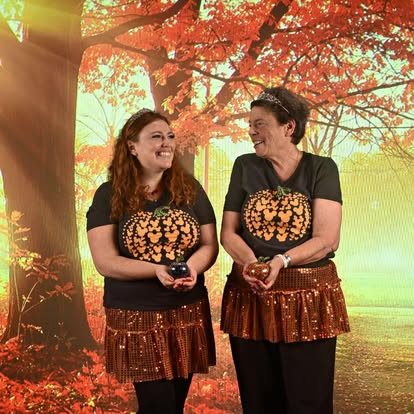
Teacher Appreciation Shabbat and the Priestly Benediction

My sermon for Shabbat Naso:

Today we celebrate our teachers, and our students. We have just finished celebrating Shavuot, the giving of the Torah at Sinai, and there are some important midrashim about how we all stood at Sinai, even those yet unborn. So all of us, even our children, and their children-to-be and their children-to-be. We learn that G-d created different sounds, different voices, even one for young children so they would not be frightened. We learn that when G-d was looking for a nation to give the Torah the Divine went to all the nations first. Then G-d went to the Israelites and asked what they would offer as their guarantor. What is a guarantor? Something that guarentees the promise. If you do x I will do y, but if you don’t do x as you promise then you will guarantee it with something worthwhile. Let’s listen in on this conversation:

Rabbi Meir said: When the Jews stood before Sinai to receive the Torah, G‑d said to them: “I swear, I will not give you the Torah unless you provide worthy guarantors who will assure that you will observe its laws.”
The Jews responded, “Master of the world, our forefathers, our ancestors, will be our guarantors!” “Your guarantors themselves require guarantors!” answered G-d.
“Master of the world,” the Jews exclaimed, “our prophets will guarantee our observance of the Torah.” “I have grievances against them, too. ‘The shepherds have rebelled against Me’ (Jeremiah 2:8),” G‑d replied. “Bring proper guarantors and only then will I give you the Torah.”
As a last resort, the Jews declared, “our children will serve as our guarantors!”"They truly are worthy guarantors,” G‑d replied. “Because of them I will give the Torah.” (Midrash Rabba, Song of Songs 1:4)
Since our children are our guarentors, we have an obligation to teach them, to teach them diligently as we just read in the V’havata. V’shinatam l’vanecha, literally to set our children’s teeth on edge.

That is what our teachers do here, day in and day out. They make Judaism interesting and fun. They take an ancient tradition and make it relevant. They set our children’s teach on edge so that they ask questions. Much of Judaism is set up so that we will ask questions. My father’s definition of a Jew, you’ve heard me say this before—even as recently as last night is someone who questions thinks and argues. There is the old joke about the Jewish kid who comes home from school and the question the mother asks is not “What did you learn in school today?” but “What good question did you ask.

Children do this naturally. Why is the sky blue? Why do I have to go to bed? Why is this night different from all other nights? Why? Why? Why? There is a child-like innocence to what they are asking. They are naturally curious and want to know more. They accept the answers they are given. We as teachers, therefore, need to be very careful to give them answers that they won’t later need to reject.

We want them to understand their tradition. To learn about the range of religious observance. How to light Shabbat candles and make Kiddush, for sure, but also why we set Shabbat aside and make it holy. Why in this 24×7 culture we need a day for rest. That G-d worked very hard to create the world and then G-d rested. Even G-d needed rest.

We want them to learn to be ethical people, to be mensches. To not be mean. To not bully. We want them to be kind. In a place where there are no men, strive to be a man (Pirke Avot). To welcome the widow, the orphan, the stranger because we were strangers in the land of Egypt. To feed the hungry, clothe the naked, rejoice with the bride and groom, to console the bereaved. To become lifelong learners.

Another story teaches us about the role of Moses as teacher:

Rav Yehuda quoted Rav: When Moses ascended to the heights [to receive the Torah] he found God sitting and drawing crowns upon the letters. Moses said to God, “Master of the Universe, what is staying Your hand [from giving me the Torah unadorned]?”

God replied, “There is a man who will arise many generations in the future, his name is Akiva ben Yosef. He will interpret mound upon mound of halachot (laws) from each and every marking.”

Moses requested, “Master of the Universe, show him to me.” God said, “Turn backwards [and you will see him].”

Moses [found himself in R. Akiva's classroom where he] sat at the back of the eighth row. He didn’t understand what they were talking about and felt weak. Then, they came to a matter about which the students asked Akiva, “Rabbi, how do you know this?” He told them, “It is the [oral] law given to Moses at Sinai.” Moses felt relieved. (Talmud Menachot 29b)

The children aren’t the only guarantors of the Torah. The adult who dedicates himself or herself to teaching the Torah to our children, to figuring out the answers to their questions, complicated questions like, “Who was Noah’s wife?” “What happened to the fish on Noah’s ark?” “Why is G-d so mean?, in asking about why G-d was willing to flood the earth or destroy Sodom and Gemorah. “What is the meaning of life?” “Why did the Holocaust happen?”

Last week our students looked at Pirke Avot, the Wisdom or the Ethics of our Fathers. It is traditional to study this between Passover and Shavuot, on Shabbat afternoon during the Omer. For some it is the first peace of Talmud we learn. Each student picked a verse that resonated with them. One of our students picked, “Acquire for yourself a friend, make for yourself a teacher.” Each student had to explain why what they found was important to him. This student looked up and said, because that is what we do here. Mr. Sternfeld is my teacher and these are my friends and my mother passes down this legacy to me, l’dor vador. I had planned to teach this verse if no one else picked it. I couldn’t have said it better. It is a great example of another piece of Talmud that I quote often: Much I have learned from my teachers, even more from my colleagues and the most from my students. (Ta’anit 7a)

In the service there is a special Kaddish d’Rabbanan, the Scholar’s Kaddish said after a rabbi, a teacher, teaches something new. Open your siddurim to page 74. It is right there, early in the service. Debbie Friedman set it to music. I offer it on behalf of all our teachers, and their students.

“For our teachers and their students
And the students of the students.
We ask for peace and lovingkindness.
And let us say: Amen.
And for those who study Torah,
Here and everywhere,
May they be blessed with all they need,
And let us say: Amen.
We ask for peace and lovingkindness,
And let us say: Amen.”

Today in congregations around the Jewish world, we read Birkat HaCohanim, the priestly benediction. We said it last night for Anthony our newest member of the tribe. We say it on Friday nights as we bless our children. We use it at weddings, at B’nei Mitzvah. Some congregations use it as part of the Shabbat amidah. Some congregations let the hazzan do it. Others have a tradition of allowing the cohanim present to duchen, to bless the congregation with these important words. Some congregations don’t do that because it can make for more stratified congregation. There are two competing teshuvot by the Committee on Jewish Law and Standards carrying equal weight. That leaves the decision up to the rabbi, the mara d’atra, the master of the place. As far as I can tell, this congregation has not had the cohanim duchen, but in the spirit of life-long learning, I call up all of our cohanim to offer this special prayer together. A blessing is a reward. Something we receive if we’ve done well. Our teachers have done well, very very well. It is also a hope, something we hope for in the future. There could be no better blessing for those who we entrust with teaching our children, our precious legacy.

Yivarechecha v’yishmarecha. May G-d bless you and keep you. Guard you and watch over you.
Ya’er Adonai panav elecha v’chunecha, May G0d cause divine light to shine upon you and be gracious to you.
Yisa Adoani panav elecha v’yasem l’cha shalom. May G-d turn towards you and grant you peace. Now and forever, amen.

Day 44: Ordination Redux

Today I am in New York. I flew in early this morning to attend the alumni professional development day and ordination of the newest group of rabbis from the Academy for Jewish Religion. Two of my dear friends, Rabbi Eliana Falk and Rabbi Julius Rabinowitz became rabbis today. Yesterday I wrote about the process of becoming. For Eliana, it was a journey. She started at the campus on 86th Street in Manhattan. She is the last of the 86th Street students and I have now passed the torch handed to me by Rabbi Alan Kay z’l of the student who took the longest to be ordained. In truth, the amount of time it takes does not matter. Life intervenes. This is, as I said yesterday, the public affirmation of what is already true. Each of the five rabbis ordained today was already a rabbi. Now we can officially call them rabbis and as Eliana said last absolutely glowing, was “This is amazing, totally awesome, beyond words,” as we hugged a cried.

Rabbi Julius Rabinowitz and I are both marathoners. We too hugged. We also found ourselves unable to speak in the moment except to compare the process to running a marathon and it is not clear to either of us which is harder. I have always wanted to run one more. My daughter and I had been talking about it the Friday before the Boston Marathon. We were actually looking at the Disney Princess Half Marathon. Then again we were talking about it the morning of the Boston Marathon. After the bombing there was no doubt where I would be next year. Julius said he is joining me. We could in fact field an entire AJR team with Rabbi Laurie Gold, Rabbi Julius Rabinowitz, Rabbi Doug Alpert and I am sure there are more. Training for a marathon is another example of a process. It begins with a single step, a great deal of persistence and dedication. Training to be a rabbi is a marathon. No question about it.

Being at ordination was terrific. I got to see old friends, see the new campus of the Academy in the Otis Elevator building in Yonkers, do some text study, buy a new kippah. From the moment I walked in with Simon in the middle of downpour, I felt welcome. “Welcome home,” Helene said. Later Rabbi Jeff Hoffman said the same thing, “Welcome home.”

The alumni meeting was interesting. Some students and alumni are still having a hard time finding jobs. I understand that. I am now one of the lucky ones. Others have become entrepreneurial rabbis. They are stringing things together and making it work but that can be much more stressful. Still others are wrestling with the high cost of health insurance, disability insurance and long term care. They wonder in the words of an old Peter Paul and Mary song, “Is the struggle worth the cost?” The song answers the question, “Don’t give up on the dream. Don’t you let it end. Carry on sweet survivor.”

The speaker, our Alumnus of the Year, Rabbi Chuck Lightner wonders about the long term health of liberal Judaism. He, himself, is consulting in Texas with a software company. The people there are very devout Christians and he thinks Christianity has a product, heaven and salvation, and we have a process. A process may not be very comforting. It requires work. Lots to think about. The discussion that followed was fascinating. We do have a product and that product may be the process, or it may be community or it may be G-d. It was very heartening.

Then came the centerpiece. Ordination itself. We processed in, ordinees, betei din, faculty, alumni and students. We looked resplendent in our black robes, kippot and tallitot.  The sign that hung over the bimah read “May your mouth speak wisdom and your tongue compose song.” Berachot 17a. That’s what we rabbis and cantors are, people who speak wisdom and sing. People who blend our traditions, rituals, laws with modernity and find the access ramps for others in the Jewish community. There were two lines (at least) that I turned to Rabbi Heidi Hoover sitting next to me and said…”I can use that. That would be good for installation.” But can I remember? No.

Later I went out for dinner with my chevruta parter, my very dear friend Rabbi Linda Shriner Cahn and her husband David. It was a free flowing, easy conversation about lots of topics. Our jobs, our kids, our perceptions of the Jewish community, our hopes for the future. We wound up sleeping at Linda and David’s home. I think Linda and I could have stayed up all night talking.

It was well worth taking the time and making the effort to be at ordination. A very, very special day. I leave New York more committed than ever to the kind of community we are trying to create in Elgin. I leave more committed than ever to being a rabbi, to being there rabbi.

Day 43: Becoming

If Day 42 was about counting, Day 43 for me was about becoming. I was proud to participate in a beit din, a Jewish court of law, to witness the becoming of seven new Jews. Three young children, four adults. Each one had a different story. Each one came to Judaism a different way.

When does someone become a Jew? For us, it is not a lighting bolt. For us it is a process, a slow process. There is study before hand. Some of these candidates studied with my colleague Rabbi Marc Rudolph for 20 sessions. My adult candidate had studied with me for nine months. Weekly. Others require a year or two.

Judaism requires a dip in a mikveh, the Jewish ritual bath, a circumcision and the appearance before the Beit Din. My candidate will be announcing his change in status at a very special service around Shavuot next week. He will stand in front of the open ark, hold the Torah, receive a blessing, his conversion certificate and proclaim the Sh’ma publicly as a Jew. He is, by his own choice and suggestion, adding the phrase, “Hayom ani yehudi. Today I am a Jew.”

At which moment does he become a Jew? When the circumcision is complete? When he dunks three times in the mikveh? When he proclaims the Sh’ma for the first time publicly as a Jew? When the certificates are signed? I am not sure there is a precise moment. It is a process.

Tomorrow I will go to ordination at the Academy for Jewish Religion. I am excited about this because three years out from my own, it marks a renewal of my becoming a rabbi. I return in a good place. I have a great job, one that I love, as a pulpit rabbi. Yes, I really am a pulpit rabbi despite some of the naysayers. Becoming a rabbi, like becoming a Jew is a process. At what point did I become a rabbi? When I entered rabbinical school? When I served as a student rabbi and people called me rabbi? When I completed the course work, passed all the comps and the ritual skills? When I dunked in the mikveh? When the smicha document was signed? When Rabbi Neil Kominsky blessed me on the bimah? Each of those moments were powerful experiences. No one moment made me a rabbi.

Marriage, like becoming a Jew or becoming a rabbi, is a change in status. It is a holy process where a couple is set apart, one for the other. It is also a process involving mikveh, a document, and the chuppah. In Hebrew the word for marriage is kiddushin, the same root as kadosh, holy. It is said that Shavuot, the anniversary of the Israelites standing at Sinai, is the wedding of the Jewish people and G-d. The Torah is the document. It too is a process. We all stood at Sinai, even those yet unborn.

Each of these public ceremonies is the public affirmation of what already is. Each of these ceremonies is poignant, meaningful, powerful. They each mark a change in status. I like what the three year old at the mikveh said. I asked her if she knew why she was there. She said, “Today I am getting a special bath.” I asked her if she knew why. She answered, “Today I am becoming more Jewish because I already am Jewish.” I think that is true for each of the new Jews we welcomed today, each of these new members of the tribe. It was a good day for Judaism. It was a good day for each of them. It was a good day for me. In the words of Rabbi Stephen Arnold, dean of the Boston rabbis, “May we not disappoint you. May we live up to your expectations so that as you continue the process of being Jewish you are proud to call yourself a Jew.” Ken yehi ratzon.

Day 42: Counting

Yesterday was day 42. Some would say that 42 is the answer to everything. Others would quickly add something about Jackie Robinson. Today is about the sovereignty of bonding. The very foundation on which we stand.

It was also the night of the congregational election. Elections in any organization are a milestone, a chance to reflect on the past year and see how far we’ve come and where we want to go. There was a lot of discussion before the election about who is a member, who can vote. Does it mean someone who has met all their financial obligations? Someone who is Jewish? How is that defined? Do households get one vote for every adult or is it one vote per household? Are the bylaws clear? Why aren’t the bylaws clearer? Interpreting bylaws and their intention can be like interpreting Torah or the US Constitution. The discussions were healthy if heated and in the end the election was a non-issue, an almost nothing event.

For my d’var Torah, I talked about counting. This week’s Torah portion is the beginning of the book of Numbers because it starts with a census. We are to count each member of the tribe. Man, woman and children all count. We make our days count. We count the Omer. We count to make sure that we have a minyan, at least 10 righteous adults. We count. That is part of how we create a holy community.

Then I told the joke of my professor Rabbi Zlotowitz. One of his professors who was from Germany used to say to his class, “Boychiks, today we are going to study the basement of Judaism.” He had confused the words basement and foundation in Judaism. BUT, at some levels, word deliberately chosen, counting is the basement, the foundation. Without people who care about Judaism we should fold up our tents and go home. Without people who care about each other, then the synagogue will will cease to exist. Without people who work diligently, then the building will collapse literally into the basement. And we have people here who have spent lots of time in our basement lately, cleaning, sorting, rescuing, working on the pipes.

Before I came to Elgin, one of our members walked me around the block and with tears in his eyes talked about the need for his foundation to be firm. Paraphrasing, “I love Judaism and I am willing to bend, to blow in the breeze but I need to know that the rock I am standing on is firm. That it is not something else. That it is Judaism.”

This is the week where we study yesod, foundation, or bonding. Prke Aovt, the Wisdom of the Fathers,a part of the Talmud because it is seven chapters, many Jews study between Passover and Shavuot as part of the Omer period of seven weeks, Pirke Avot said it so well for this congregation (I used the quote yesterday in my blog.) Pirke Avot teaches, “Every assembly whose purpose is to serve G-d will, in the end be established. But every assembly whose purpose is not for G-d’s sake, will not in the end be established.
The word assembly, knesis, is the same root as kneseth, We are an assembly of Israel. We have stood up and been counted. We must keep our focus on the foundation of the assembly: On Torah, On Avodah, On Gemilut Chasidim. We must do this because as we serve each other and build community, a kneseth Israel, we are serving G-d. Then our foundation, our basement will remain firm.

Day 41: Preparing to Receive Torah

Yesterday was day 41 of the counting of the omer. This whole period of the omer, the fifty days between the second night of Passover and Shavuot is a period of preparing, preparing to receive Torah. Yesterday I went to the Chicago Board of Rabbis meeting. Rabbi Arthur Green who is the dean of the rabbinical school at Hebrew College was the speaker. He is excellent lecturer and teacher. He is a renown expert of Hasidim. He was teaching a Hasidic text about the receiving of the Torah. I, however, did not receive the handout so some of this is foggy.
And that was the point. The Torah was given to Moses and the people in a fog, a heavy cloud as the text says. The text we were studying (name of text at a latter date, remember I was in a fog) made the point that Moses could have received the Torah without the cloud, but because he would have to transmit it to the people it needed to be shrouded in stories and fables and parables. Some even think that the Torah was a blueprint for creation and existed before. Rabbi Larry Kushner in his book, The Book of Miracles, talks about this idea coming from Pirke de Rabbi Elizer 3. “I will use the Torah as a blueprint of creation and that way all the parts of the world will fit together and I and the Torah will be inside everything.”

People can only hear so much. Even the Israelites standing at the foot of Mount Sinai said to Moses, “You go up. You do this for us. It is too hard. It is too scary for us.” They even said “We will do and then we will hear.” How do you know what to do before you hear the commands, before you hear the instructions?” The midrash teaches that the voice of G-d was so powerful (see Psalm 29) that G-d created a voice for each person, even a special voice for young children. (Exodus Rabbah 5:9)

Some people are seekers. They want to draw close to G-d. They have a deep spiritual sense and a deep thirst. They want to understand. Some people are intellectual. They love to wrestle with text. To understand the nuance of every letter. To delve deeply into the halacha or the ritual. Some people are invested in the community. They like to gather. To have a glass of schnapps. To take care of one another. Any of these points can be entry points into the deeper meaning of life.

Some people just seem to drift a little. They are working very hard to stay ahead. There is little time to reflect, to meditate, to read, to join. They may draw comfort from the familiar, from the way we’ve always done things. They don’t want to be surprised or to have the Rock of their foundation rocked. They are happiest doing things they have always done without questioning. Recreating the Judaism of their youth or of their bubbe and zayde is what motivates them. They want us to be their Moses, doing Judaism for them.

Sometimes we are each all of these. Like the four children at Pesach. There is a place for each of them, for each of us.

Another interesting piece of the discussion with Rabbi Green was how we as rabbis teach this tradition. Do we set ourselves up as the only purveyors of truth? Is there only one truth? We have very knowledgeable congregants, highly educated and very aware. Do we “dumb down” the tradition? To what purpose? I know I try not to but I may be guilty with some.Do we prepare or use notes or do we make it look seamless. Do we risk being arrogant? Or like the Israelites do our congregants want us to be Moses, dealing directly with G-d. Do we risk carrying this metaphor too far? Do we take the veil off? Do our congregants want us to? What if some do and some don’t? How do we reach everyone’s needs?

Rabbi Green told a Hasidic story about a rebbe’s tisch, table, where he solicited a verse from each person and interpretted it. Each person felt heard and appreciated. It looked seamless. It looked like a continuation of the direct revelation of G-d.

Pirke Avot teaches, “Every assembly whose purpose is to serve G-d will, in the end be established. But every assembly whose purpose is not for G-d’s sake, will not in the end be established. This is the week in the counting of the omer is about bonding, about foundation. For all of us, even Moses, the Torah is veiled, but together we will receive it.

Day 40: A Woman’s Voice

Yesterday was Day 40. It was a busy day, filled with the usual Sunday synagogue stuff. Bar Mitzvah student at 8:15AM, Hebrew School from 9-12. Then we had a shiva minyan/memorial service for the father of a young member. I’ve never done a shiva minyan with that many young children in attendance. We don’t teach life cycle at Congregation Kneseth Israel. We live life cycle. I hope that the service was of some comfort to this young mother of a 2 year old and a 5 year old who lost her father at age 54. Too young. Too young. The evening before when we were preparing this very special service, one person said to me, “I didn’t know a woman could say kaddish.”

In some places they can’t. Sometimes in Israel they can’t. Sometimes a woman can be arrested in Israel for wearing a talit or reading Torah. She can be beaten and kicked for wearing tefilin or sitting in the wrong part of some bus runs. Sometimes a woman can’t even receive an academic award. Shocking? I should say so. But unfortunately not news. Yesterday I presented about Women of the Wall, an organization I have supported since its inception in 1981, to the Central Great Lakes Region of the Women’s League of Conservative Judaism. I was excited to present late breaking news that a judge in Israel, an Orthodox Jew himself had ruled that women do have a right to worship at the Wall how they see fit. Today, unfortunately there is even later breaking news over turning his decision and putting the law of holy places back to 1981 which forbids citizens to pray in ways that are “contrary to the local custom”. The term “local custom” has failed to be defined in the 22 years since passing the addendum to the law, thus the need for legal clarity. To say I am disappointed is an understatement. You see for me, this is very, very personal. In 1981 when I lived in Israel I was attacked by Israeli soldiers. They told me I was worse than Hitler, sitting around my swimming pool in Brooklyn not doing anything to help the Jewish people survive. They, on the other hand, they screamed at me, were spilling Jewish blood to save Jewish lives. My rabbi in Israel at the Orthodox yeshiva I was studying in explained the attack as G-d’s punishment. You see, I am a woman who wanted to be a rabbi and women can’t.
I began to learn the halacha that goes with the usual injunctions. I thought I wouldn’t have to use this knowledge again. I thought we were past this. But apparently we are not. Even with some Orthodox groups now ordaining women (one is leaving Chicagoland for Montreal, her husband rabbi proudly announced at the Chicago Board of Rabbis meeting this morning that he will be a rebbetzin in Montreal)
I keep going over and over these arguments. Am I torturing myself? Maybe. Am I trying to justify myself and prove that I am authentic? Maybe. Does it matter? Certainly. So for the record, here we go again.
Kol isha–the voice of a woman, In three separate places in the Talmud it says that a man cannot hear a woman sing because of the sexual nature of a woman’s voice. (Berakhot 24a, Kidushin 70a, and Sota 48a), Berakhot 24a likens a woman’s voice to nakedness based on a verse in Song of Songs, “For your voice is sweet and your countenance comely.” This gets very complicated but that is the root of the issue. Rabbis through the centuries have tried to interpret the exact meaning here and there are lots of essays and rulings about this topic. For me, I find it difficult to believe that a woman’s voice–my voice, spoken or sung, could be that alluring.

How can a woman read Torah? Won’t she pass any impurity to the Torah scroll if she is menstruating? My understanding is that the issue was not whether she would pass impurity to the scroll, but that even though a woman or a child could be called up to the Torah for an aliyah it was considered unsightly because it might offend the honor of the congregation. What does that mean? Rabbis explain this as saying that a woman actually had time to practice and was better at it then the men who worked all day so she could show up a male Torah reader. It is about not embarrassing someone in public. What I learned working at Mayyim Hayyim, the community mikveh and education center in Newton, is that a person cannot pass impurity to the water of the mikveh. And that impurity is not the best translation. I prefer their formulation of ritually ready. So as my high school students suggested last year, if everyone, male or female goes to the mikveh prior to services at the Kotel, then no one would be ritually impure. An interesting suggestion.

A woman is not obligated to the positive time-bound mitzvoth. There are several explanations of that–we are either spiritually superior to men so we don’t need the structure OR we are too busy running the household, nursing a baby etc that we don’t have time to preform the time bound mitzvot. Specifically there are seven commandments that fall in this category: listening to the shofar, sitting in the sukkah, waving the lulav, wearing tzitzit and hence talit, wearing tefilin, saying Sh’ma in the morning and evening and counting the omer. While we are exempt, it doesn’t mean we can’t. The Talmud teaches: Women, slaves, and minors are exempt from the obligation (to fulfill the mitzvot)of the recitation of the Sh’ma (keri’at Sh’ma) and of t’fillin, but they are obligated to fulfill (the mitzvot of) prayer,mezuzah, and the recitation of the grace after meals (birkat hamazon). (Berachot 3.3)

You may be saying to yourself, huh? Obligated to pray and to recite birkat hamazon but not to say Sh’ma? How does that work? Now you are experiencing the joys of Talmudic logic. It gets even more complicated when it wonders whether someone not obligated (a woman, a child or slave) can fulfill the mitzvah for someone who is obligated (a male).

“Women, slaves and minors are exempt from the recitation of Sh’ma and from tefilin but are obligated for the Amida prayer, mezuza and birkat hamazon.” (Berachot 3:3). This is familiar territory for me, part of the Talmud sugiya that was on my rabbinical school comprehensive exam. I had argued it, puzzled over it and ultimately passed a test about it–but despite the rabbis attempts to explain it in the Gemara and in the other commentaries it does not make sense on the surface. If you argue that Sh’ma and tefilin are time bound so that women don’t need to do them, then what about birkat hamazon and the amidah? Aren’t these also time bound? If you argue that women are obligated in mezuzah shouldn’t they be in tefilin since the commandment is in the same passage of Deuteronomy?

Maimonides writes that women are permitted to perform the mitzvah but should not say the blessing, since they are not obligated and the blessing contains the phrase, “who commanded us.” Rambam wrote: “Women, slaves, and minors are exempt from tzitzit from the Torah…Women and slaves who want to wrap themselves in tzitzit may do so without a berakha. And so too with other such mitzvot from which women are exempt: if they want to perform them without a berakha, one does not protest” (Hilkhot Tsitsit 3:9).However, both the Rashba and Rabbenu Tam hold that they should say the berachot because of Michal. TThe Rashba (1235-1310 Spain) specifically said in a teshuva (responsum): “I agree with those who say that if they desire they can do all such mitzvot and recite the blessings, on the basis of Mikhal bat Shaul who used to wear tefillin and they did not protest; indeed she did so with the approval of the sages (kirtzon hakhamim) and by the nature of the matter since she puts on tefillin she blesses” (Teshuva 123).

So fast forward, what do we do with this today? If you need even more details I encourage you to peruse the JOFA.org site. They have most of the halacha spelled out very clearly. Knowing the halacha helps refute some of the misinformation and misunderstandings that have been handed down from generation to generation and that I still hear today, like the woman who thought that a woman could not say Kaddish.

The Conservative Movement has championed the equality of men and women in our synagogues. We have mixed seating, we allow to be counted in the minyan, to have an aliyah, to read from the Torah, to even be ordained as rabbi. We teach boys about tefilin before their Bnei Mitzvah but not so much the girls. We require boys at Schecter schools and Camp Ramah to put on tefilin but not necessarily the girls. I agree with Rabbi Joshua Cohen writing on the USCJ website http://www.uscj.org/Women_and_Tefillin7649.html that until we require the girls to as well, the Conservative Movement will not achieve the equality of the sexes that has been a hallmark of its tradition.

So this is where I come out–a woman is obligated to pray because as the Talmud text says it brings us, all of us, comfort. Women have prayed out loud–Miriam sang at the shores of the sea, Hannah prayed in the temple, Ruth enjoined Naomi to join her (the very text we will read for Shavuot). Esther found her voice through fasting and prayer and the encouragement, cajoling and begging of Mordechai, Michal, daughter of the Cushite wore tefilin and the sages did not protest.” (Eruvin 96a) In another place it states that Michal, daughter of King Saul laid tefilin.” Rashi’s daughters wore tefilin, one blew shofar and one became a mohel. While some have argued that the evidence that Rashi’s daughters wore tefilin may be shaky, other women of the time period did. Other women in the time period did.  Fazonia, the first wife of Rabbi Haim ben Attar, wore tallit and tefillin, as did Rabbi Haim’s second wife. The Maid of Ludomir (Hanna Rachel Werbermacher) in the 19th century also wore tefillin. Jewish women have written prayers and spoken prayers for centuries. We have collections of tekhinot, women’s prayers on women’s issues.

As someone who has worked on the front lines of preventing domestic violence in the Jewish community, it is never OK to assault a woman, especially a woman who is trying to express her spirituality and draw close to G-d. Period. Women’s voices are not disturbing the peace. Women wearing a talit, a kippah or tefilin are not a violation of Jewish law. Period. Women should not be arrested for any of these seeming offenses.

I am proud that I was chosen to speak at the regional convention yesterday.  The women I spoke with yesterday were enthusiastic and knowledgeble. Some have even had the privilege of davenning with the Women of the Wall. Some have Rosh Hodesh Groups in their Conservative synagogues. Sometimes I feel like I am Esther. The plot of the Book of Esther changes when Mordechai says to Esther, “Who knows, perhaps you have attained your royal position for just this reason. Perhaps you are in this place for just this reason.” May each of us find our voice–as did Esther, Devora, Hannah, Ruth, and Miriam, all who found their voices.

Day 39: Membership Has Its Privileges

My D’Var Torah and Discussion for Shabbat Bechukotei and New Member Shabbat

“Membership has its privileges” it is a phrase we all know from the iconic American Express ad. When I went to look for it online, a quick google search revealed lots of images for this phrase, from a newer ad campaign for the Boys and Girls Clubs, to various churches to other youth organizations, health, golf and country clubs.

What does it mean to belong?
To be accepted
To have privileges
To be able to use the pool
To be part of a group

Is membership a privilege? How?
Because you can do things you couldn’t do if you were not a member
Because you have rights as a member of the group
But you also have responsibilities and obligations

Last night was New Member Shabbat. We had 6 of our new families represented. Several had previous commitments. What do you think their expectations are in joining a shul? What are any of our expectations? Why join? Why did you join?
Community
A sense of home, belonging, being comfortable
A place to raise kids, teach kids Jewish tradition
A place to learn
Because I have friends here
Because I have to
Because my family has always belonged
A place to say Kaddish
Because I am a Jew
I don’t know

Anthony is about to become a “Member of the Tribe”. What does that mean? Why do we use that term? Why do people choose to become Jewish?
For marriage
Because it feels right
To give meaning to life
Because no other religion felt as comfortable or was what I believe
To be closer to G-d

I have probably said this before, but that is because words and their etymology fascinate me. The word religion comes from the Latin, “Religio”, to tie back up into. What does that mean? What are we trying to tie back up into?
Our families of origin
The feeling of being loved
Recreating the experience of Sinai
A sense of the Divine presence

Today we read the very last chapter of Leviticus. At the end of the reading we will all stand and say together, Chazak, Chazak v’nitchazek, Be strong, Be Strong and Be Strengthened.

But before we get to that, we will read this very last chapter. It is essentially the Biblical dues structure. Being a member of the tribe not only comes with privileges but also responsibilities. What are those responsibilities?
Paying dues
Giving 700% of your time
Not just dues, time, talent, skills
Pitching in when the shul needs help
Supporting one another as friends
Making sure there is a minyan

Have you ever been to a restaurant where the kids pay for their children’s meal based on what they weigh?

This chapter is like that. The chapter outlines the monetary commitment each member must make. It is costly to maintain the Sanctuary and each person, man, woman and child must pay their worth in silver. How do we measure the life of a person? The insurance industry has all kinds of ways to do that. Actuary tables. How much is your earning power? How much longer will you live? As Eitz Chayyim points out our society values rich people more than poor people, economically productive people more than less productive, fertile women more than childless women (it forgets to point out that is true in Torah too—think of all the barren women who felt in order to be worthy they needed a child!), clever and attractive people more than others. However, in G-d’s temple, people are evaluated “by the sanctuary weight, b’shekel ha-kodesh” Somehow giving silver to the Sanctuary is holy!

If you don’t have silver, kesef, for your sanctuary weight, you can give animals or land. If you can’t make the dues payment you can go before the high priest and an adjustment will be made. Even in the time of the Torah they had people who couldn’t pay their dues–but they still belonged!

We are in the middle of counting, counting the omer. We have been counting every day—well almost. We are at Day 39. Numbers, the next book we read teaches us to number our days. So does the Psalms. The musical Rent asks “Five hundred twenty-five thousand six hundred minutes…how do you measure, measure a year?

In daylights, in sunsets
In midnights, in cups of coffee
In inches, in miles, in laughter, in strife
In five hundred twenty-five thousand six hundred minutes
How do you measure, a year in the life?

How about love?

Five hundred twenty-five thousand six hundred minutes
Five hundred twenty-five thousand journeys to plan
Five hundred twenty-five thousand six hundred minutes
How do you measure the life of a woman or a man?

In truths that she learned
Or in times that he cried
In bridges he burned
Or the way that she died

How do we measure a life? In holy gifts we bring to the synagogue. In being a member. In standing up and being counted. In coming together to make a holy community, in being Kneseth Israel, an Assembly of Israel.

Day 37 and Day 38: Marching Towards Shavuot

The Days are creeping up there. Slowly, slowly we are getting towards Sinai. Today I spent some time at the Victory Center, senior apartments, assisted living facility where one of our most senior members lives. It was my regularly scheduled monthly program. We talked about Shavuot. My member remembered that she was confirmed. She remembered every detail–the white dresses, decorating the sanctuary with flowers, marching in, her Biblical verse which she was so proud of, “The Lord is my shepherd I shall not want.” We talked about eating dairy for Shavuot. When asked why someone suggested that it is because it is white, pure like the 10 Commandments. We shared recipes for cheesecake and blintzes. I learned that they always have blintzes in the dining room on Sundays for dinner. Then we tried to remember all of the 10 Commandments. We got through most of them on our own but it was hard. We talked about which is the most meaningful to them. They like “Honor your mother and father.” I think some of them think that in their older ages they are not being honored. We talked about the different between honor, which we think means respect and Fear or Revere as it come up in Leviticus. Someone said that we should fear our parents like we fear G-d. We talked about that for a long time. We talked about what commandment might be missing in the formulation of the 10 Commandments. They answered: “Love your neighbor as yourself.” “Do unto others as you would have others do unto you.”

Then we read the Book of Ruth. What does it mean to follow someone like Ruth followed Naomi? What does it mean as a widow to think your life is that bitter, Mara, because you no longer have a husband and you can’t provide sons for your daughters-in-law? You can’t provide food? You are at the will of the community to take care of you? It was a very poignant discussion. They felt it was a nice story and one that really resonated with them.

Later I went to New Member Shabbat. One little girl was wearing a sparkly smiley face T-shirt. I was reminded of another confirmation. The class ahead of my daughter, one of the students, Paula Rand, said that the 11th Commandment would be “Just smile.” Smile and the world smiles with you. It is the corollary of “be nice and others will be nice to you.” So I told that story at shul, off the cuff. Everyone smiled. May it be so.

Day 36: Lamed Vavniks

Today is the 36th day of the counting of the omer. 36 is an important number in Judaism. Each Hebrew letter corresponds to a number. Aleph is one, bet is two, gimel is three. Thirty six is the numerical equivalent of double eighteen, double life. It is also said that there are 36 people, righteous people who sustain the world. This belief goes back to Talmudic times based on the text from Sanhedrin 97b, that 36 righteous greet the Shechinah. Another name for these special people is the nistraim, concealed ones and they are even concealed from each other. Each one is so humble that if you were to suggest that they were one of the lamed vavniks they would protest.

I was at a meeting recently where I was told I received special treatment. I answered that I thought this person, who knows from all accounts she could be a lamed vavnik, treated me nicely because I had treated her kindly. Isn’t that true, if you are nice, than others will be nice to you. It is a variant on Hillel’s statement, “Do not do unto others what you would not have them do to you. Love your neighbor as yourself; the rest is commentary. Go and study. ” This is really the foundation, the yesod of Judaism. Today, the 36th day is chesed b’yesod, the lovingkindness of the foundation. This is it; it doesn’t get more central. Jesus said it this way: “Do unto others as you would have them do unto you.” We know it as the golden rule. Sounds simple, no? Apparently it is not so simple.

Earlier this week someone swore at me when I asked a question. “Frankly, rabbi, it is none of your g-dxxxxed business.” Now I have been know to use curse words–and I think I know them all, but using one to a rabbi, especially one that uses G-d’s name in vain, probably means that you are not a lamed vavnik and probably means you lose your place in the world to come. The person has some anger management issues, and some self-esteem issues, The person has had a hard life, no question, but the person seems angry and bitter most of the time. I think this person is trapped in fear.

My question remains, why do some people turn out to be lamed vavniks, truly one of the rigthous ones, while others wind up so bitter and angry that they swear at a rabbi for a farirly innoucous question?

Rabbi Nachman of Bratslav who I quoted yesterday has another take on the central thing: The whole world is a very narrow bridge and the central thing is to not be afraid. Maybe that is the secret. If we can conquer our fear and experience G-d’s loveingkindness, the chesed which is the foundational building block, then, then we can overcome the pain and disappointment in our lives. Otherwise, we are trapped in a building without a strong foundation. May we all find that chesd, G-d’s lovingkindnss so that we can live without fear. Then we will have discovered the foundation of Judaism.


Day 35: Walking Tall

Today was Day 35 of the counting of the omer, the malchut b;hod, the kingdom of beauty and humility. Micah said that what G-d requires of us is to do justly, love mercy and walk humbly with our G-d. What does it mean to walk humbly? Simon Jacobson says that to walk humbly is to walk tall. I’ve been thinking a lot about body language lately. What does it communicate? Do we have a tendency to misread body language. Can we hold our heads up high and still be humble? I think the answer is yes. Recently we got some distressing news. It is not life-shattering but it was very expensive and disappointing. There were a couple of ways to look at this piece of news. We could disappointed–and we are, or we could see ourselves as incredibly lucky, which we also are. I realized that it is a both.and thing. What I didn’t have to feel was a sense of shame in the mix. Humble does not mean shame.

I am reminded of a guided meditation by Rabbi Susan Freeman. She taught, as an infant not quite ready to walk, we walked with G-d, blameless, like Noah who was blameless in his generation…Noah walked with G0d (Gen 6:9). Walking provides a sense of wholeness, of being fully present, with nothing separating us from anything. Walking with G-d. Later we are like Abraham who is told to Lech Lecha, go towards himself, Now we are no longer walking with G-d, but before G-d. “Walk before Me and be blameless (Gen 17:1) We continue walking, walking, walking, secure in the knowledge that G-d walks with us. Walking a long time, the body begins to become weary, very tired. We wonder what is the point of this long journey. we may be resigned. Angry. Bitter. We may wonder, “What have we gained by keeping G-d’s charge. and walking in mourning, before the Lord of Hosts (Malachai 3:14). But strangely we are not frightened but calm. We are safe. We are going to a safe place. “Ki holech adam el olamo, For we walked to our eternal abode.” (Eccesiastes 12:5). There is a calmness even as we stop walking. There is no fear. G-d is with us, right behind us, as always. G-d has been a constant companion. G-d neither slumbers nor sleeps. Though we walk through the valley of the shadow of death we shall fear no evil.”(Psalms 23:4). A full lifecycle of walking with G-d, humbly as Micah suggests.

So I took a walk today. I revelled in the beauty, the greens and the yellows, the forsythia and the daffodils, the tulips and the magnolias. The bright blue sky. The gentle breeze. I felt G-d’s presence wash over me. Rabbi Nachman of Bratslev said that we spend an hour outdoors each day alone walking with G-d and pouring out our heart. I was humbled as I walked tall and as I walked with G-d. So may it be for us all.

Rabbi Nachman’s prayer:

Grant me the ability to be alone;
may it be my custom to go outdoors each day
among the trees and grass – among all growing things
and there may I be alone, and enter into prayer,
to talk with the One to whom I belong.
May I express there everything in my heart,
and may all the foliage of the field -
all grasses, trees, and plants -
awake at my coming,
to send the powers of their life into the words of my prayer
so that my prayer and speech are made whole
through the life and spirit of all growing things,
which are made as one by their transcendent Source.
May I then pour out the words of my heart
before your Presence like water, O L-rd,
and lift up my hands to You in worship,
on my behalf, and that of my children!